
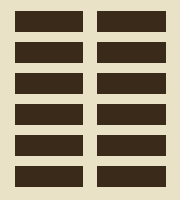
The Judgment
“The Receptive brings about sublime success, furthering through the perseverance of a mare. If the superior man undertakes something and tries to lead, he goes astray; but if he follows, he finds guidance. It is favorable to find friends in the west and south, to forgo friends in the east and north. Quiet perseverance brings good fortune.”
This opening statement reveals a paradox that lies at the heart of receptive energy. Success comes not through force or initiative, but through the quiet persistence symbolized by a docile mare – an animal that carries weight without resistance, moving steadily forward through life’s terrain. The superior man, rather than asserting his will, discovers that true guidance emerges only when he follows rather than leads. The directional references point to the natural alignment of receptive energy: finding harmony in the west and south, while releasing attachments that pull toward the east and north. This is not passive surrender, but an active yielding that allows circumstances to unfold with minimal friction. Good fortune arises from what the text calls “quiet perseverance” – a steady, unwavering commitment to following the natural flow of situations.
The Image
“The earth’s condition is receptive devotion. Thus the superior man who has breadth of character carries the outer world.”
The earth receives the image of The Magnetic, presenting a scene of fertile receptivity that supports all things without competition or claim. Unlike the dynamic force of Heaven that pushes outward, the earth holds steady, providing foundation and nourishment for whatever passes through its domain. The superior man embodies this quality of “breadth of character” – a expansive capacity that isn’t diminished by carrying the world, but strengthened by it. His role is not to dominate or control, but to sustain and enable. The “outer world” here refers to all phenomena, relationships, and responsibilities that require his attention and support. Like soil that nourishes seeds without demanding their specific form, the superior man offers his substantial presence to whatever needs to grow and manifest.
The central teaching of this hexagram emerges from the interplay between these two aspects of existence. The Judgment speaks to the practical application of receptivity in human relationships and personal conduct, while the Image reveals the deeper nature of what it means to embody receptive energy. Together, they suggest that true power often operates through yielding, that success frequently comes to those who create space for others to flourish, and that the most profound influence is exerted not through assertion but through consistent, reliable presence. The superior man discovers that by following rather than leading, by supporting rather than controlling, he becomes the ground upon which greater achievements can take root and grow.
The wisdom contained in these opening passages points toward a fundamental misunderstanding that permeates modern thinking about strength and success. We are conditioned to believe that taking the initiative, asserting our will, and leading from the front are the hallmarks of effective action. Yet the I Ching presents a contrary perspective that recognizes the profound power inherent in receptive qualities. The mare, described as docile yet strong, embodies a particular kind of capability that modern culture often dismisses as weakness. She carries her burden without complaint, moves steadily in whatever direction proves necessary, and does her work without seeking recognition or reward.
This metaphor extends far beyond the simple relationship between rider and horse. The mare represents the earth itself – that great feminine principle which receives seeds, nurtures growth, and ultimately returns everything to itself. The superior man, rather than being passive, actively cultivates this receptive capacity as a form of strength. He understands that influence and effectiveness often come not through forceful action but through the creation of conditions that allow natural processes to unfold. When he takes the initiative, he disrupts these natural flows and finds himself going astray; when he follows, he aligns with the deeper patterns that govern successful outcomes.
The directional references in the Judgment – finding friends in the west and south while losing them in the east and north – point to the importance of surrounding oneself with like-minded individuals who share receptive qualities. The southwest represents the domain of magnetic energy, where things naturally attract and unite. The northeast, conversely, represents obstruction and difficulty – a direction that blocks the flow of receptive influence. This suggests that the quality of one’s inner circle matters enormously for maintaining the proper orientation toward success. Associating with those who embody dynamic, assertive energy can actually work against the cultivation of receptive qualities, leading to conflict and misalignment.
The phrase “quiet perseverance” captures something essential about the mature expression of The Magnetic. This is not passive waiting or resigned acceptance, but rather a steady, unwavering commitment to following the natural order. It requires considerable courage to maintain this stance when external pressures demand more aggressive responses. The superior man develops what might be called the art of non-contention – the ability to hold his ground while appearing to yield, to provide support without seeking credit, and to facilitate outcomes without claiming ownership. This represents a sophisticated form of wisdom that recognizes the limitations of purely active approaches to life’s challenges.
Deepening into the Old Texts
In the ancient understanding of Chinese cosmology, The Magnetic represented the earth element that formed the foundation upon which all Heaven-driven activity could flourish. The social implications of this hexagram were profound for a civilization that lived in close connection with agricultural cycles and seasonal changes. Just as the earth receives the rains and snows, the seeds and nourishment that determine the harvest, so too did the superior man receive and process the various influences that shaped society. He did not compete with the rulers or warlords for power, but provided the stable foundation that made their endeavors possible.
Confucius, in his commentary on this hexagram, emphasizes the great originating capacity of The Magnetic – its ability to give birth to all things through obedient reception of Heaven’s influences. This reflects the Chinese understanding that true creation emerges not from isolated acts of will, but from the harmonious interaction between complementary forces. The superior man recognizes that his role is not to initiate but to respond appropriately to what the times require. His largeness of spirit contains and supports all things, matching the unlimited power of The Dynamic without attempting to replicate or replace it.
The agricultural context illuminates this relationship beautifully. Farmers understood that the best crops came not from forcing plants to grow faster or taller, but from creating optimal conditions – proper soil preparation, adequate moisture, protection from extremes, and patient waiting for the right moment of harvest. The superior man applies these same principles to human affairs. He prepares the ground for others’ success, provides necessary resources and support, and times his interventions appropriately. His comprehension is wide because he must account for all the variables that affect the flourishing of those who depend on him.
The modern application of these principles becomes evident when we consider the difference between leadership styles that inspire versus those that intimidate. The manager who creates a safe space for team members to contribute their best ideas, the parent who provides consistent boundaries while allowing children room to explore, the friend who listens without immediately offering solutions – all these individuals embody the energy of The Magnetic. They understand that true influence comes not from dominating conversations or decisions, but from creating the conditions where others can access their own wisdom and potential.
The hexagram also speaks to the psychological reality that our greatest contributions often come when we stop trying so hard to contribute. There is a peculiar kind of exhaustion that comes from constantly asserting ourselves, from always being “on stage” and responsible for outcomes. The Magnetic offers permission to step back, to take a supporting role, to simply be present and reliable. In doing so, we discover that our quiet competence often has more lasting impact than our most ambitious initiatives. The superior man finds that by following rather than leading, he paradoxically becomes the one others naturally follow.
The Six Lines
Line 1: “When there is hoarfrost underfoot, solid ice is not far off.”
This opening line describes the initial manifestation of receptive energy, when subtle tendencies begin to crystallize into more defined patterns. Hoarfrost appears delicate and almost ethereal, yet it signals the approaching conditions of solid ice. In human terms, this represents those moments when we first notice the stirrings of our deeper nature – the intuitions, sensitivities, and quiet promptings that seem fragile but carry the momentum of larger transformations. The line advises us to recognize these early signs without resistance, allowing them to develop according to their own nature rather than forcing premature conclusions.
The commentary explains that the cold air has begun to take form, suggesting that what we experience as hoarfrost is the visible expression of underlying temperatures that will eventually produce solid ice. This mirrors the psychological reality that our current struggles or challenges contain within them the seeds of future stability and structure. Rather than being disturbed by these early signs of rigidity, we can trust in the natural progression toward whatever consolidation is required. The key is to allow the process to unfold without intervention, recognizing that the apparent fragility of hoarfrost precedes the strength of solid ice.
For those cultivating receptive awareness, this line offers reassurance that small, seemingly insignificant developments often indicate larger movements toward completion. The wise person learns to read these environmental signs as markers of changing conditions, adjusting their approach accordingly. There is no need to rush or force the process; indeed, interference at this stage might disrupt the natural timing. Instead, consider maintaining awareness while exercising patience, understanding that the emergence of clarity often follows periods of apparent confusion.
Line 2: “Straight, square, great. Without purpose, yet nothing remains unfurthered.”
The second line amplifies the theme of effective receptivity by describing qualities that emerge naturally when we align with the appropriate mode of being. “Straight, square, great” suggests a posture of integrity and expansiveness that requires no conscious effort to maintain. Unlike the straighter lines of the Dynamic, which push toward specific goals, this straightness emerges from within – a natural alignment with one’s authentic nature. The “great” quality indicates not arrogance or excess, but rather the spaciousness that comes from being unafraid of one’s own capacity.
What makes this line particularly noteworthy is the paradox of action without intention: “Without purpose, yet nothing remains unfurthered.” This challenges conventional assumptions about effectiveness, suggesting that when we operate from a place of genuine receptivity and authenticity, our actions naturally serve whatever needs to be served. The earth’s condition exemplifies this principle – it doesn’t set out to “further” anything, yet everything that depends on it flourishes. The superior man discovers that purposefulness imposed from without often creates resistance, while purpose that emerges from within flows effortlessly toward appropriate outcomes.
The imagery of terrestrial forces helps us understand this differently than we might otherwise. The earth doesn’t struggle to be useful; its usefulness is inherent in its nature. Similarly, when we embody the qualities of The Magnetic – steadiness, reliability, spaciousness – we become naturally conducive to positive change. This line suggests that the most profound impact often comes not from strategic planning but from consistent embodiment of virtuous qualities. The straight-forward movement to occupy a spacious area indicates that authenticity itself creates room for others to expand and thrive.
Line 3: “Hidden lines. One is able to remain persevering. If by chance you are in the service of a king, seek not works, but bring to completion.”
This line introduces the theme of concealment and timing that characterizes mature expressions of receptive energy. The “hidden lines” suggest that true strength often operates beneath the surface, in qualities that are not immediately visible or obvious. The ability to remain persevering while keeping these capacities hidden indicates a form of self-mastery that resists the temptation to seek recognition or validation for one’s contributions.
The scenario of serving “in the service of a king” provides a concrete context for understanding this principle. Rather than competing for prominence or seeking credit for achievements, the superior man focuses entirely on completing whatever tasks present themselves. This represents a level of professionalism and dedication that transcends personal ambition. When we can serve causes larger than ourselves without needing to be the center of attention, we tap into a wellspring of motivation that is both sustainable and fulfilling.
The commentary’s emphasis on letting hidden qualities “shine forth at the right time” introduces an important nuance. Hidden doesn’t mean suppressed or denied; rather, it suggests operating from a place of inner security that doesn’t require constant external validation. The superior man understands that timing matters enormously – that forcing revelation before its moment diminishes impact, while waiting for the opportune instant magnifies effectiveness. This line teaches us to trust in the value of our unseen contributions while remaining patient about their eventual recognition.
The image of concealed talent that will be unfolded when the time is ripe speaks to the reality that many valuable qualities only become apparent through their appropriate expression. A musician’s skill remains potential until the right piece of music calls it forth; a writer’s insight waits for the proper subject to achieve full expression. By focusing on bringing affairs to completion rather than seeking works for personal glory, we create the conditions where our hidden strengths naturally emerge in ways that serve the greater good.
Line 4: “A tied-up sack. No blame, no praise.”
The fourth line presents a scenario that initially seems to represent limitation or restriction, but upon deeper reflection reveals the wisdom of careful conservation. A sack tied up suggests the completion of activity and the secure storage of what has been gathered. This image speaks to the importance of knowing when to conclude projects and preserve the fruits of labor rather than continuing to pursue additional gains.
The absence of both blame and praise indicates a state of perfect balance – what Confucius describes as “no error.” This suggests that when we properly honor the natural cycles of activity and rest, giving and receiving, effort and conservation, we align with a rhythm that requires no justification or apology. The tied sack represents the mature understanding that not everything needs to be continuously expanded or promoted; sometimes the most skillful action is to secure what has been achieved and prepare for the next cycle.
From the perspective of divination, this line serves as a practical guide to action – reminding us that caution and wisdom often lie in knowing when to stop rather than when to push forward. The commentary’s emphasis on remaining “free of harm” through careful attention to timing suggests that our greatest protection comes not from defensive maneuvers but from honoring the natural ebb and flow of circumstances. When we tie up our affairs with care, we create stability that serves both ourselves and others.
This line also speaks to the psychological reality of burnout and exhaustion. Many people push themselves beyond sustainable limits because they cannot bear to see their efforts end without continued recognition. The superior man learns to find satisfaction in completion itself, understanding that properly concluded activities create the foundation for future endeavors. The tied sack represents not failure but fulfillment – the secure containment of what has been accomplished, ready for the next season of activity.
Line 5: “A yellow lower garment brings supreme good fortune.”
The fifth line marks a significant shift in emphasis, moving from concealment and conservation to the revelation of inner beauty and virtue. The “yellow lower garment” carries deep symbolic meaning within Chinese culture, where yellow represented the color of sovereignty, wisdom, and the central position. Unlike the imperial yellow robes reserved for emperors, this reference to a lower garment suggests that supreme virtue can manifest in any position or circumstance. The “lower” aspect indicates humility and accessibility, showing that true nobility doesn’t require outward display.
The commentary’s focus on the ornamental color being “in the right and central place” emphasizes the importance of inner alignment. Supreme good fortune emerges not from external achievements or social advancement, but from the proper positioning of one’s essential qualities. When our core values and authentic nature are correctly situated within our being, everything else tends toward benefit and flourishing. This line suggests that the most profound transformations occur when we stop seeking validation from outside and instead cultivate the confidence that comes from knowing our own worth.
The interpretation of this as “inner (spiritual or moral) beauty” connects directly to the earth’s capacity to support all things through its hidden fertility. Just as the earth’s richness isn’t immediately visible but produces abundant results, so too does the yellow garment represent the quiet confidence that comes from knowing one’s essential nature is sound. This inner beauty attracts positive circumstances and relationships because it radiates authenticity and wholeness.
For those cultivating receptive awareness, this line offers encouragement that the qualities they’re developing may not always be obvious to others, but they carry within them the seeds of exceptional benefit. The superior man understands that true fortune comes not from grasping opportunities but from becoming the kind of person through whom opportunities naturally flow. The yellow garment reminds us that we each possess an inner sovereignty that, when properly cultivated and expressed, brings its own form of supreme good fortune.
Line 6: “Dragons fight in the meadow. Their blood is black and yellow.”
The final line presents a dramatic departure from the previous five, describing a scene of conflict and exhaustion that seems to contradict the earlier themes of harmony and success. Dragons fighting in the meadow evoke images of powerful forces that have exhausted their purpose and now turn against each other. The merging of black and yellow in their blood suggests the confusion that results when complementary energies lose their proper balance and begin to consume each other.
Confucius’s observation that “The way comes to an end” points to the conclusion of the creative cycle that began with The Magnetic. Having moved through the stages of initial manifestation, proper development, concealment, conservation, and revelation, the process now reaches its limit. This doesn’t represent failure but completion – the natural conclusion of a cycle that has fulfilled its intended purpose. The superior man understands that even the most beneficial phases of development must eventually conclude, making way for new beginnings.
The commentary’s comparison to various mythological battles – Lucifer’s rebellion, the gods of Valhalla, the Twilight of the Gods – suggests that this image speaks to the universal pattern of decline that follows peak achievement. Whether viewed through Norse mythology, Christian cosmology, or other traditions, the theme remains consistent: even the most powerful forces eventually exhaust themselves through conflict and internal division. The dragons’ struggle represents the futility that emerges when receptivity becomes rigidity and yielding becomes weakness.
For those studying the I Ching, this line serves as a crucial reminder that no state, however beneficial, is permanent. The superior man learns to recognize the signs of exhaustion and transition, understanding that the goal is not to maintain any particular condition indefinitely but to move gracefully through the natural cycles of growth and decline. The blood that is “black and yellow” indicates the mixing of opposing forces that can no longer sustain their creative tension. This line encourages letting go of what has served its purpose rather than clinging desperately to familiar patterns, even when they’ve been successful.
Conclusion
The wisdom of Hexagram 2 reveals itself gradually as we move through its six lines, beginning with the gentle emergence of receptive qualities and culminating in the recognition that even these must eventually conclude their cycles. The central teaching centers on the profound insight that true strength often manifests through yielding, that success frequently comes to those who create space for others to flourish, and that the most lasting impact is often achieved through quiet consistency rather than dramatic assertion. The superior man embodies this understanding by following rather than leading, supporting rather than controlling, and allowing natural processes to unfold without unnecessary interference.
The progression through the lines illustrates the complete arc of receptive development: from the initial signs of change (line 1) through the steady expansion of authentic expression (line 2), the strategic use of concealment and timing (lines 3-4), the revelation of inner virtue (line 5), and finally the recognition that all phases must conclude (line 6). This sequence mirrors the natural cycles we observe in agriculture, psychology, and spiritual development. Each stage serves its purpose and contributes to the overall pattern, but none can be sustained indefinitely without disrupting the larger harmony.
The hexagram suggests that our contemporary challenge lies in learning to embody these principles in a culture that often equates visibility with value and constant activity with productivity. Consider how different our relationships might become if we could approach them with the mare’s steady reliability, or how much more effective our contributions would be if we focused on completion rather than credit. The practice of The Magnetic involves developing what the ancients called “receptive devotion” – a quality of presence that supports without dominating, facilitates without controlling, and completes without seeking recognition.
Perhaps the most practical application of this wisdom is learning to distinguish between times for action and times for receptive rest. The superior man knows that some problems require bold intervention, while others need patient waiting and careful preparation. By developing sensitivity to these different moments, we can avoid the common trap of either passivity or premature action. The tied sack of line 4 reminds us that sometimes the most skillful choice is to secure what we’ve gained and prepare for the next phase, while line 5’s yellow garment encourages us to trust in the value of our inner work even when it’s not immediately apparent to others.
Ultimately, Hexagram 2 teaches us that the earth continues to support all things without claiming credit for its success. In a world obsessed with individual achievement and personal branding, this represents a radical alternative that paradoxically leads to greater fulfillment and lasting impact. The superior man who embodies The Magnetic discovers that by disappearing into the service of something larger than himself, he becomes indispensable to the flourishing of everything around him. This is the way of the sage who knows that true greatness lies not in being foremost, but in ensuring that all things can find their proper place and purpose in the great web of existence.